


South Korean Researchers Poised to Revolutionize Dental Care with Regenerative Technology
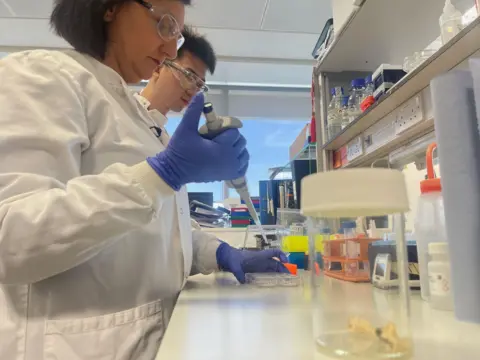
In late 2025, South Korean scientists captured global attention with promising advancements in regenerative dentistry. Teams from institutions like Seoul National University and the Korea Institute of Science and Technology (KIST) have developed a bioactive patch (often described as a microneedle or biodegradable patch) designed to stimulate the natural regrowth of dentin—the hard tissue beneath tooth enamel—using the body’s own stem cells.
The patch works by delivering bioactive molecules, including tideglusib (a GSK-3 inhibitor) and growth factors, directly to damaged areas. After cleaning the cavity, the thin, dissolvable patch is applied, allowing molecules to penetrate and activate dormant stem cells in the dental pulp. This triggers the regeneration of natural, living dentin to fill cavities, potentially reducing the need for extensive drilling, fillings, or artificial restorations.
Animal trials (on mice and ferrets) showed encouraging results: formation of tooth buds that developed into complete teeth with enamel, dentin, and pulp, exhibiting drvondental.com hardness similar to natural human teeth. The research has advanced to preclinical safety evaluations, with limited human trials planned for late 2025 or early 2026.
If successful, this could offer a minimally invasive, less painful alternative to traditional treatments, with estimated initial costs around $300—far lower than implants (thousands of dollars). It aligns with broader global efforts, including Japan’s USAG-1 inhibitor trials (human testing started in 2024, potential availability ~2030).
However, caution is advised. Fact-checks from sources like France 24 in December 2025 clarified that viral claims of a patch fully regrowing entire teeth by 2026 are overstated or false—no credible peer-reviewed study confirms full tooth regrowth in humans yet, and social media hype often exceeds the evidence. The technology primarily targets dentin repair in existing teeth, with full tooth regeneration (e.g., new buds) still experimental.
Full regulatory approval and widespread use may take until the early 2030s, requiring rigorous Phase I-III clinical trials for safety, efficacy, and long-term outcomes (e.g., durability, no uncontrolled growth). While exciting, this remains in early stages—patients should rely on verified sources and continue preventive care.
South Korea is leading the charge in shifting dentistry from replacement to true regeneration, offering hope for millions facing tooth loss or decay. The future of natural, pain-free dental healing may be closer than ever! 😁